Coffee Subscriptions: How to Pick the Right One
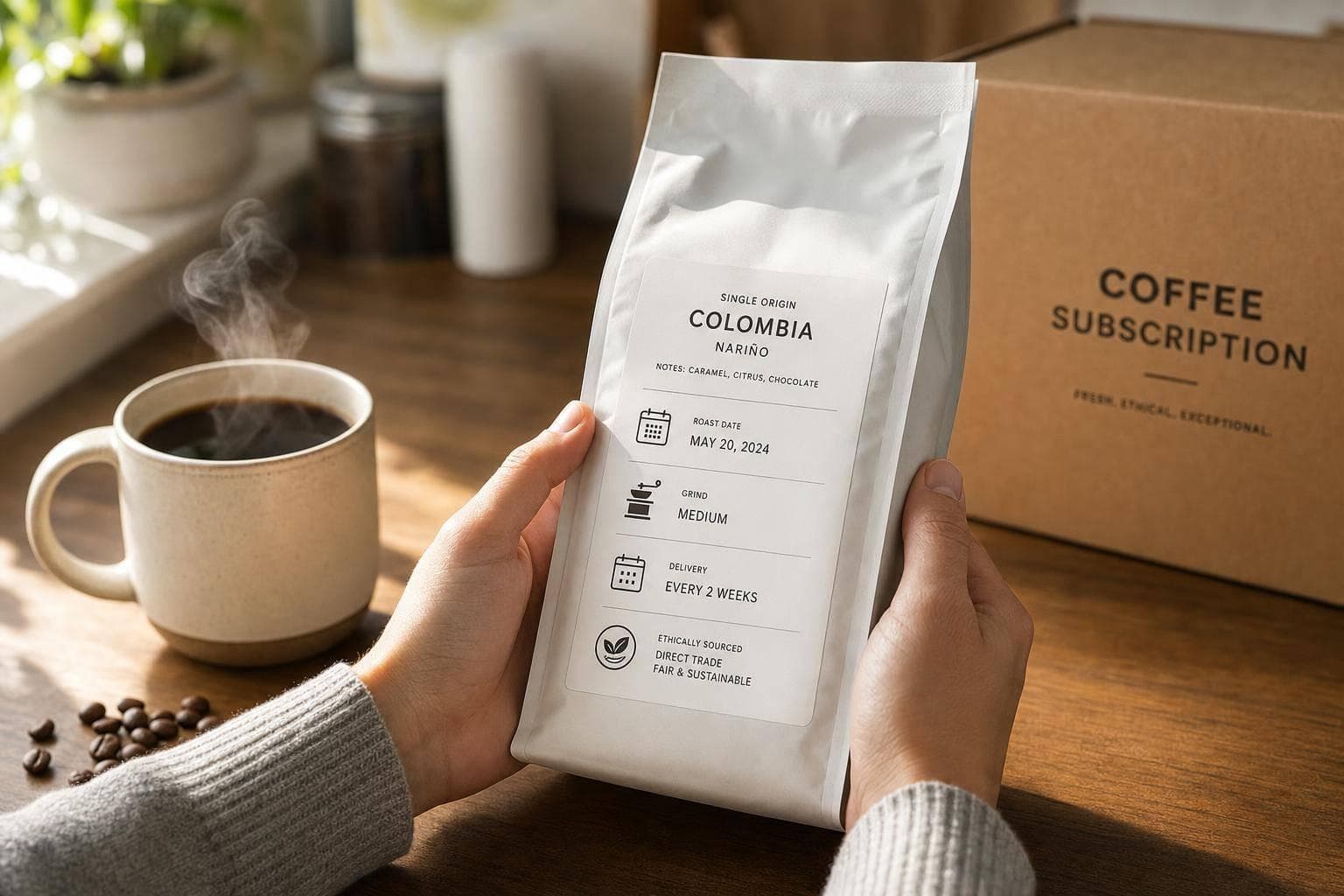
Coffee Subscriptions: How to Pick the Right One
A coffee subscription delivers freshly roasted beans or ground coffee to your door on a schedule you choose. It ensures better flavor, saves money compared to café prices, and gives you access to unique beans from independent roasters. To choose the right subscription, consider these key factors:
- Flavor Preferences: Decide between light, medium, or dark roasts based on your taste. Light roasts are fruity, medium roasts are balanced, and dark roasts are smoky.
- Whole Bean vs. Ground: Whole beans stay fresh longer. If you prefer ground coffee, match the grind size to your brewing method.
- Delivery Timing: Align shipments with your consumption. A 12 oz bag makes about 16–24 cups, so adjust frequency to avoid stale coffee.
- Flexibility: Look for services that let you pause, skip, or change orders easily.
- Sourcing & Ethics: Support roasters that prioritize transparency, fair trade, and sustainable practices.
Subscriptions range from single-roaster services for peak freshness to curated plans for variety. Start small, track your preferences, and refine your plan for a hassle-free coffee experience.
Are Coffee Subscriptions Worth It?
sbb-itb-af00fa5
Understanding Your Coffee Preferences
Before picking a coffee subscription, it’s important to figure out what you like. Your preferred roast level, brewing method, and caffeine tolerance all play a role in finding the right fit. Taking the time to pinpoint these details will help you choose a subscription that matches your taste and routine - and avoids piling up unopened bags on your counter.
Roast Levels and Flavor Profiles
The roast level is the biggest factor in determining a coffee's flavor. Here’s a quick breakdown:
- Light roasts: These highlight the bean’s natural character, offering bright, fruity, and floral notes. Think flavors like citrus, berries, or jasmine.
- Medium roasts: A middle ground, with caramel sweetness and nutty undertones, minus the sharpness of light roasts.
- Dark roasts: These emphasize the roasting process itself, delivering smoky, bitter, or chocolatey notes with very little acidity.
Fun fact: lighter roasts actually contain more caffeine per scoop than darker ones since the roasting process burns off some caffeine. If you’re unsure where to start, try a medium roast. If it feels too sharp or sour, go darker. If it tastes dull or too heavy, go lighter.
Whole Bean vs. Ground Coffee
If you have a grinder, go for whole bean coffee. Ground coffee loses its flavor fast - within 30 minutes of grinding, oxygen starts breaking down its aromatic oils. Whole bean coffee, on the other hand, keeps its flavor intact for much longer.
"Whole bean coffee is the only logical choice for a subscription. It has a shelf life nearly 30 times longer than pre-ground coffee." - The Roast Haus Coffee Co.
If pre-ground coffee is more your speed, make sure the grind size matches your brewing method. Here’s a quick guide:
| Brewing Method | Recommended Grind Size |
|---|---|
| Espresso | Fine |
| Pour-Over | Medium-Fine to Medium |
| Drip Coffee | Medium |
| French Press | Coarse |
| Cold Brew | Coarse |
Caffeine and Sensitivity Options
If you’re scaling back on caffeine, half-caf blends can give you the ritual without the jitters. For a completely caffeine-free option, look for decaf coffee labeled "Swiss Water Process" (SWP). This chemical-free method uses just water, temperature, and time to remove caffeine while keeping more of the original flavor intact.
For those with sensitive stomachs, dark roasts or beans from regions like Sumatra or Brazil are naturally lower in acidity and easier to digest. Some subscriptions even highlight "low-acidity" options, so it’s worth filtering for that if needed. These preferences will help you zero in on a subscription that prioritizes both quality and personalization.
Choosing Subscription Logistics That Fit Your Routine
Once you’ve figured out your favorite coffee, the next step is deciding how much you need and how often it should arrive. Getting this balance right ensures your coffee stays fresh and avoids the dreaded fate of stale beans gathering dust on your shelf.
How to Estimate Your Coffee Consumption
Did you know that a standard 12 oz bag of coffee typically makes between 16 and 24 cups? The exact number depends on how strong you like your brew. For example, if you’re drinking two cups a day, one bag should last about 10 days. For households with multiple coffee drinkers or the occasional extra cup, you’ll need to scale up accordingly.
"A standard 12oz bag... yields approximately 16 to 20 cups of coffee. If you drink two cups a day, one bag lasts about 10 days." - The Roast Haus Coffee Co.
Here’s a quick guide to help match your daily coffee habit with the right subscription plan:
| Daily Consumption | Bags Needed (12 oz) | Delivery Schedule |
|---|---|---|
| 1 cup/day | ~1.5 bags/month | Monthly (2 bags) |
| 2 cups/day | ~3 bags/month | Bi-weekly (1–2 bags) |
| 4+ cups/day (household) | ~6 bags/month | Weekly (1–2 bags) |
Once you’ve estimated your needs, choose a delivery schedule and bag size to keep your coffee at peak freshness.
Delivery Frequency and Bag Sizes
Most coffee subscriptions offer flexible schedules like weekly, bi-weekly, or monthly deliveries. For solo drinkers, bi-weekly delivery is often ideal for ensuring your coffee stays fresh. The key is timing your orders to align with the optimal freshness window - typically 3 to 14 days after roasting.
If you’re a heavy coffee drinker or buying for a small office, many roasters offer larger bag sizes, such as 2 lb or 5 lb options. Larger bags can help cut down on packaging waste and reduce the cost per ounce. However, whole beans are generally the best choice for maintaining freshness, especially when buying in bulk.
Subscription Flexibility and Control
A good coffee subscription should adapt to your lifestyle, not the other way around. Look for services that let you skip, pause, or delay shipments with ease. A simple online management portal is a great indicator that the roaster puts customer convenience first.
"We want your coffee subscription to fit your lifestyle, not the other way around." - Blue Bottle Coffee
You should also check if the subscription allows you to tweak details like grind size, roast level, or bag quantity from order to order. If you’re unsure about your needs, starting with a monthly delivery is a great way to test the waters before committing to a more frequent schedule.
Evaluating Ethics, Quality, and Freshness
When choosing a coffee subscription, it’s essential to dig into the details - like where the beans come from, how they’re roasted, and how fresh they are. These factors can vary a lot, and understanding them ensures you're getting coffee that aligns with your taste and values.
Sourcing Transparency and Certifications
The best roasters don’t just slap a country name like "Colombia" on the label. Instead, they share specifics about the farm, estate, or cooperative where the beans were grown. This level of transparency isn’t just about ethics - it often leads to better-tasting coffee.
You’ll frequently come across terms like Fair Trade and Direct Trade. Fair Trade certification ensures farmers earn at least a minimum living wage and adhere to labor standards. Direct Trade, on the other hand, takes things further by creating direct partnerships between roasters and farmers. These relationships often result in higher-than-Fair-Trade payments and investments in local communities and infrastructure.
"Direct trade fosters a transparent, trusting relationship, whereas other programs may have more intermediaries that obscure where the money and quality end up." - Bean & Bean
Other certifications to look out for include organic (indicating minimal chemical use) and shade-grown (which supports biodiversity). Additionally, check for details on how the beans are processed - whether they’re Washed, Natural, or Honey processed - since this impacts flavor.
Roast Quality and Freshness Indicators
Ethical sourcing is just one side of the coin. To enjoy coffee at its best, you need to pay attention to roast quality and, most importantly, freshness. Coffee reaches its peak flavor between 3 and 14 days after roasting, but it starts losing its aromatic compounds within the first two weeks. By 30 days, the flavor dulls significantly, and after 60 days, it’s far past its prime.
The easiest way to judge freshness? Look for a "Roasted On" date. Unlike a "Best By" date, which is vague, the roast date tells you exactly when the beans were roasted.
"A 'Roasted On' date is the only way to track the 14-day window of peak chemical vitality. If a company hides the roast date, they're hiding the age of the bean." - The Roast Haus Coffee Co.
High-quality subscriptions typically roast to order and ship within 24–48 hours. Bags with one-way degassing valves are also a good sign - they let CO₂ escape after roasting while keeping oxygen out, which helps maintain freshness.
Why Independent Roasters Are Worth Supporting
A great subscription doesn’t just deliver fresh coffee; it supports values you care about. Independent roasters often have the edge when it comes to freshness and quality. They roast in smaller batches - usually just 20–25 lbs at a time - which allows them to carefully adjust the process to bring out the best in each bean. This level of attention isn’t something large-scale operations can easily replicate.
Beyond quality, many independent roasters focus on making a positive impact. Some create blends that support causes like mental health initiatives or vocational training programs. By choosing these roasters, your subscription dollars can do more than just buy coffee - they can help drive meaningful change.
Finding these roasters used to be a challenge, but platforms like Small Coffee Roasters make it simple. Their directory features over 5,624 independent roasters across the U.S., searchable by state or city. Each roaster’s profile includes details on subscriptions, shipping, and sourcing, so you can quickly find options that align with your values and preferences. It’s a great way to ensure your coffee subscription checks all the boxes for quality and ethics.
Comparing Subscription Models and Prices
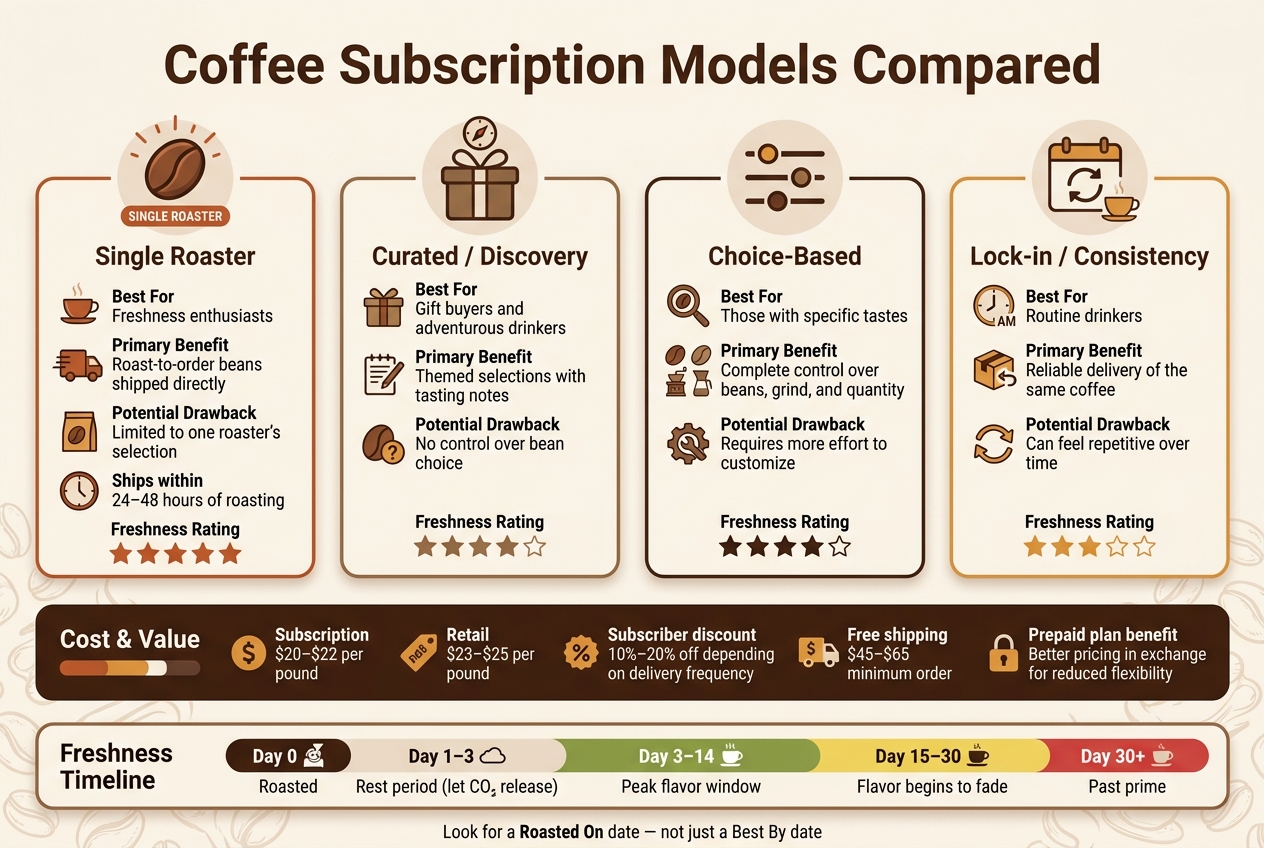
Coffee Subscription Models Compared: Cost, Freshness & Flexibility
Once you've figured out your coffee preferences and logistics, the next step is comparing subscription models and their costs to find the best fit for your needs.
Subscription Models Explained
Here’s a breakdown of the most common subscription models:
| Model | Best For | Primary Benefit | Potential Drawback |
|---|---|---|---|
| Single Roaster | Freshness enthusiasts | Roast-to-order beans shipped directly | Limited to one roaster’s selection |
| Curated / Discovery | Gift buyers and adventurous drinkers | Themed selections with tasting notes | No control over bean choice |
| Choice-Based | Those with specific tastes | Complete control over beans, grind, and quantity | Requires more effort to customize |
| Lock-in / Consistency | Routine drinkers | Reliable delivery of the same coffee | Can feel repetitive over time |
If freshness tops your list, the single roaster model is a solid choice. Subscribing directly to a roaster like Spiritus Coffee Co. or Twisted Goat Coffee often means beans are shipped within 24 to 48 hours of roasting. On the other hand, curated models are perfect if you love exploring new flavors and origins, though you won’t get to pick the beans yourself.
"The right coffee subscription matches how you actually drink coffee, not how you think you should." - Twisted Goat Coffee
Now, let’s dive into how these models stack up in terms of cost and value.
Cost and Value Breakdown
To figure out what you’re really paying, calculate your cost per cup based on how much coffee you drink. Subscriptions typically range from $20 to $22 per pound, compared to $23 to $25 at retail. Many roasters also offer discounts of 10%–20%, depending on how often you get deliveries. However, keep in mind that shipping fees can eat into those savings unless you qualify for free shipping. Free shipping thresholds are usually set between $45 and $65.
If you’re looking to save a bit more, prepaid plans might be worth considering. Committing to several months upfront often gets you a better deal, but you’ll trade off some flexibility. For first-time subscribers, a month-to-month plan is a safer way to test the waters with a new roaster.
Using Directories to Find the Right Subscription
Once you know which subscription model and price range work for you, the next step is finding roasters that align with your preferences. The Small Coffee Roasters directory is a fantastic resource, listing over 5,624 independent U.S. roasters. Each profile provides details on subscription options, shipping timelines, and sourcing practices. You can even filter by state or city, making it easy to support local businesses while cutting down on shipping time for fresher beans.
This directory simplifies your search by highlighting roast styles, ethical certifications, and subscription details. Whether you're prioritizing freshness, ethical sourcing, or customization options, it’s a great tool to help you find a subscription that fits your lifestyle and taste preferences.
Testing and Refining Your Coffee Subscription
Fine-tuning your coffee subscription is essential to ensure you consistently enjoy fresh, flavorful coffee. Testing different options helps you find the perfect balance for your taste and consumption habits.
Start with Trial-Friendly Plans
Before committing to a subscription, try a single-bag purchase or a sampler pack. For instance, The Roast Haus offers an "All Day Sampler", which includes multiple roast profiles in one shipment for a one-time payment. This lets you explore the quality of a roaster's coffee without any long-term commitment.
When you're ready to subscribe, begin with the smallest quantity and lowest delivery frequency offered - usually one 12oz bag per month. A 12oz bag brews about 16 to 20 cups, making it easy to assess whether the quantity matches your coffee-drinking habits. Look for services that allow easy cancellation or pausing with just one click.
"A subscription ensures you're always drinking coffee at its best, not whatever's been sitting on a shelf." - Spiritus Coffee Co.
Give it at least two shipments before deciding if the roaster meets your expectations. One delivery alone might not provide enough insight into consistency in roast quality or delivery reliability.
Once you've sampled a few shipments, start tracking your preferences to personalize your subscription.
Track Preferences and Adjust Settings
Keeping a simple tasting journal can make a big difference. Use a notes app or a small notebook to jot down details like roast level, bean origin, processing method, and how the coffee tastes after brewing. Over time, you'll notice patterns - maybe you lean toward fruity Ethiopian beans or medium roasts that pair well with your drip coffee maker.
Use these notes to tweak your subscription settings. Many roasters offer online dashboards where you can swap beans, adjust grind size, or change delivery frequency. If your subscription uses an algorithm or "Roaster's Choice" system, consistently rating the coffees you receive helps the service better understand your preferences and improve future selections.
Once you've dialed in your preferences, it's time to focus on timing your deliveries for peak freshness.
Align Delivery Schedules with Freshness
Timing is everything when it comes to coffee flavor. Beans typically reach their peak 7 to 14 days after roasting and start to lose flavor after about 30 days. Many independent roasters ship beans within 24 to 48 hours of roasting, meaning they arrive fresh but may need a few days to "rest" and release excess CO2. For the best flavor, wait about three days after receiving your beans before brewing.
Always check for a "Roasted On" date on the bag. If the bag only lists a "Best By" date, it could mean the beans have been sitting in storage for a while. As Carolina Coffee Works explains:
"Fresh coffee isn't just a nice-to-have, it's the entire game."
If you find yourself with too much coffee piling up, don't cancel your subscription right away. Most services offer pause or skip features, which allow you to adjust your delivery frequency without losing your subscription. Try reducing your frequency by one step and reassess after a month to ensure you're always brewing coffee at its freshest.
Conclusion: How to Find the Right Coffee Subscription
Choosing the perfect coffee subscription starts with understanding your own needs. Think about your flavor preferences, how much coffee you drink, and how much control you want over delivery schedules. These basics will help steer you toward a subscription that truly fits your lifestyle.
Focus on roast, grind, and delivery flexibility. Look for services that allow you to pause or skip shipments whenever needed. As Twisted Goat Coffee wisely explains:
"The right coffee subscription matches how you actually drink coffee, not how you think you should."
Supporting independent roasters brings benefits beyond great coffee. These roasters prioritize freshness and ethical practices, often roasting to order and shipping within 24–48 hours. They also work directly with farms, ensuring fair compensation and transparency in sourcing.
If you’re unsure where to begin, Small Coffee Roasters is a great resource. This directory includes 5,624 independent roasters across the U.S., searchable by state or city. It also highlights which roasters offer subscriptions, making it easier to find options that align with your values and taste preferences.
"A subscription is not a trend or novelty; it is the natural progression toward better, more intentional coffee at home." - Wildflower Coffee Company
Start with a small plan, note what you enjoy, and tweak your choices as you go. The best coffee subscription is one that consistently delivers fresh, delicious coffee with minimal effort.
FAQs
How do I choose a coffee subscription if I’m new to specialty coffee?
When selecting a coffee subscription, start by thinking about your brewing method and flavor preferences. Opt for services that provide freshly roasted, whole beans with clearly labeled roast dates to ensure the best quality. Consider how much coffee you typically consume - a 12-ounce bag usually lasts about 1 to 2 weeks for most households. For added convenience, choose a subscription that lets you easily adjust or cancel deliveries. If you're not sure where to start, look for a service that offers a quiz or sampler options to help you discover roast profiles that suit your taste.
What’s the best way to store coffee so it stays fresh between deliveries?
To keep your coffee fresh, use an airtight, opaque container that shields it from air, light, and moisture. Store it in a cool, dark place like a pantry or cabinet to maintain its flavor. Skip refrigeration - the moisture and odors in the fridge can harm the beans. If you buy coffee in bulk, divide it into smaller airtight containers to limit air exposure whenever you open one.
Can I find a subscription that fits dietary needs like low-acid or decaf?
Many coffee subscription services offer options tailored to specific dietary needs, such as low-acid or decaf blends. These choices are perfect for individuals with sensitive stomachs or those who prefer to limit their caffeine intake. Be sure to explore services that emphasize these features to find one that matches your preferences.