How to Find Local Coffee Roasters Near You
How to Find Local Coffee Roasters Near You
Finding a local coffee roaster is easier than you think, and it can completely change how you enjoy coffee. Here's what you need to know:
- Why Choose Local Roasters? They often roast beans to order, ensuring maximum freshness. Plus, they support small farms and your local economy.
- Where to Start? Use online directories like Small Coffee Roasters, which lists thousands of roasters by location. Search terms like "micro-roaster [your city]" or "single origin roaster near me" can refine your results.
- Farmers' Markets & Events: Many roasters sell directly at farmers' markets or pop-up events. Check vendor lists and schedules online before visiting.
- Community Groups: Platforms like Reddit or Instagram can connect you with hidden gems and local coffee enthusiasts for recommendations.
For the best experience, look for roasters that provide clear roast dates, detailed sourcing info, and flexible purchase options like subscriptions or local pickup. Your next cup of coffee could be just around the corner.
How to Find Local Coffee Roasters Near You: A Step-by-Step Guide
How to find NEW coffee roasters and coffees that you'll love - Coffee Roaster Warm Up Sessions
Using Online Directories to Find Local Roasters
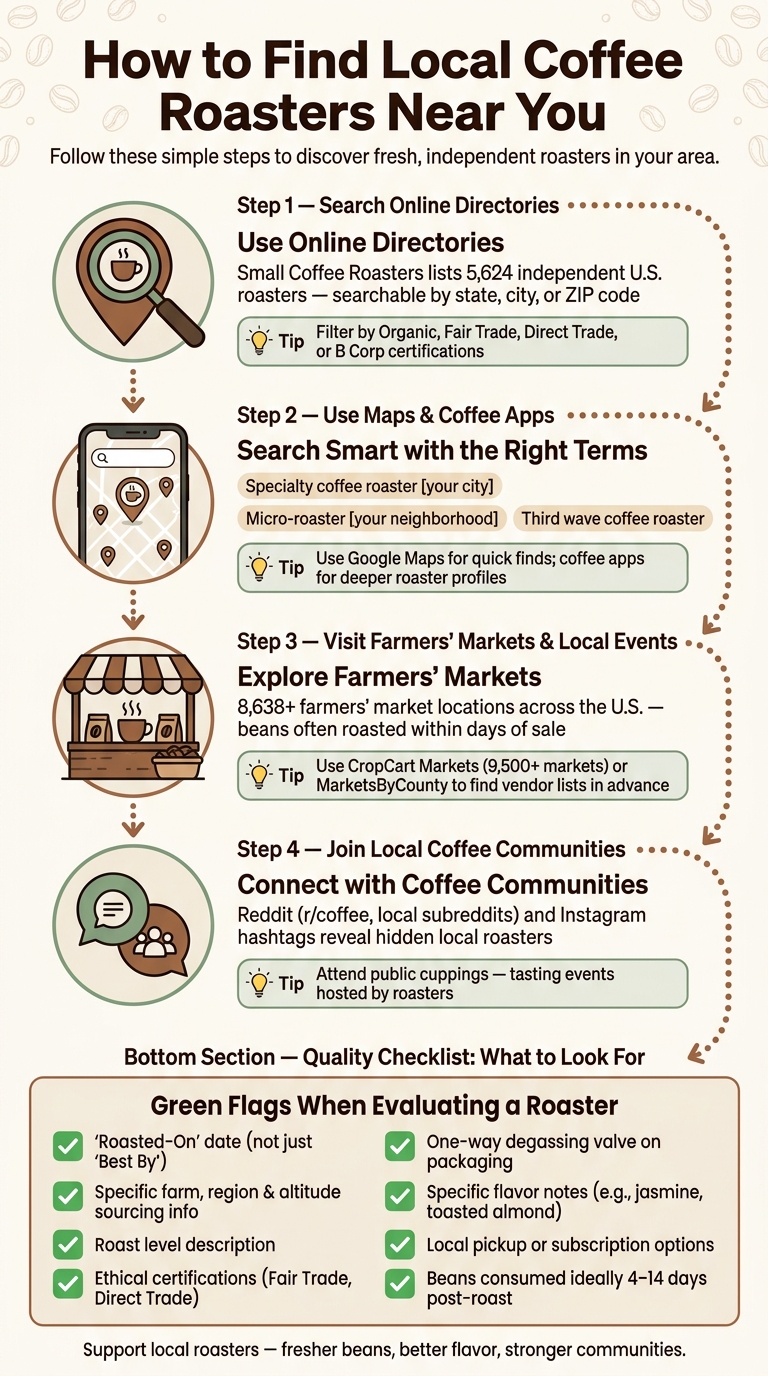
Online directories are a quick and efficient way to discover independent coffee roasters near you. For example, Small Coffee Roasters lists 5,624 independent roasters across the United States, searchable by state or city. This approach zeroes in on small-batch, artisanal operations, making it easier to find local gems.
How to Search by Location
Start by searching for your state, then narrow it down to your city, neighborhood, or ZIP code. Many directories let you refine results further by roast type or ethical certifications like Organic, Fair Trade, Direct Trade, or B Corp. You can also use specific search terms like "micro-roaster [your city]" or "single origin roaster near me" to focus on smaller, craft-oriented businesses instead of larger commercial ones. Once you’ve got a refined list, you can dig deeper into individual profiles.
What to Check in a Roaster Profile
After narrowing your search, it’s time to evaluate each roaster’s profile. A well-detailed profile offers more than just a name and address - it provides key insights into the quality and transparency of their offerings. One critical detail to look for is the "Roasted-On" date instead of a generic "Best By" date. As explained by Cumbre Coffee:
"Think of the roast date as the coffee bean's birth date. For the best flavor, you want to brew it within the first few weeks of its life - ideally between three days and three weeks after it was roasted."
You’ll also want to check for detailed sourcing information, such as the farm name, region, altitude, and processing method. Vague terms like "house blend" or just listing a country of origin can indicate a lack of transparency. Additionally, practical details like café hours, shipping options, local pickup, and subscription services with flexible delivery schedules can make a big difference in your overall experience.
| Detail to Check | Why It Matters | Red Flag |
|---|---|---|
| Roast Date | Confirms peak freshness | "Best By" date only |
| Sourcing Info | Shows transparency and farmer support | Vague "House Blend" or country only |
| Roast Style | Matches your flavor preference | No description of roast level |
| Certifications | Reflects ethical sourcing practices | No mention of sourcing standards |
| Local Pickup | Saves on shipping and reduces carbon footprint | Online-only with no local option |
Using Maps and Coffee Apps to Locate Roasters
After exploring online directories, map tools and specialty coffee apps can help you discover even more options. A quick search like "specialty coffee roaster [your city]" can uncover artisanal businesses focused on quality and transparency.
Search Terms That Work
The search terms you use can make a big difference. For example, "specialty coffee roaster [your city]" often leads to quality-focused roasters, while "micro-roaster [your neighborhood]" is better for finding smaller, under-the-radar operations. Want to explore lighter roast profiles or origin-specific flavors? Try "third wave coffee roaster". If you're after exclusive, single-farm offerings, searches like "single origin roaster near me" or even specific varietals such as "Geisha coffee roaster" can narrow down your choices.
| Search Query | Best For |
|---|---|
| "Specialty coffee roaster [your city]" | Broad results for local, quality-focused options |
| "Micro-roaster [your city]" | Discovering small, niche roasters |
| "Third wave coffee roaster" | Finding roasters who focus on craft and origin |
| "Roast-to-order coffee [neighborhood]" | Securing the freshest beans |
| "Coffee roaster with public cuppings" | Locating places with tasting events |
If you're looking for decaf coffee with no chemicals, search for "Swiss Water Process", which indicates a roaster using a natural decaffeination method.
Once you've got your search terms, use map tools and coffee apps to compare your options.
Maps vs. Apps: Which to Use
Google Maps and similar tools are great for quick searches, especially when you're in a new area and need something nearby. They provide practical details like hours, directions, and basic reviews.
On the other hand, specialty coffee apps give you deeper insights. These apps often include detailed profiles about roasters, their sourcing practices, and even local events. Community reviews and features like filtering by "open now" or tracking your visits can help you decide if a roaster is worth checking out.
In short, maps are perfect for finding nearby options quickly, while coffee apps are ideal for learning more about a roaster's background and offerings.
sbb-itb-af00fa5
Finding Roasters at Farmers' Markets and Local Events
Farmers' markets, with over 8,638 locations across the U.S., are a fantastic way to find fresh, locally roasted coffee. Unlike the coffee you find in grocery stores - which might have been sitting in warehouses for months - the beans at these markets are often roasted just days before they’re sold. Regional festivals can be another goldmine, as they bring together multiple roasters offering samples and special deals. To make the most of your visit, it’s smart to plan ahead.
How to Research Vendor Lists and Event Calendars
Before heading out, take some time to research. Tools like CropCart Markets, which features over 9,500 markets along with user reviews, and MarketsByCounty allow you to search by city, state, or zip code. These directories often include vendor lists, so you can check if a coffee roaster will be present. Keep in mind that some roasters are regulars, while others may only appear seasonally. Checking the market’s online schedule can save you a wasted trip.
Social media and local coffee groups are also great resources for discovering pop-up events or smaller markets that may not be listed in official directories.
What to Look for When You're There
Farmers' markets not only offer fresh coffee but also give you a chance to connect directly with the people behind the beans. Once you’re there, you can use your research to evaluate the vendors and their offerings.
Start by checking the roast date to ensure freshness. As David Mitchell, Lifestyle Strategist at Rexvoro, points out:
"The ideal window for consuming coffee is generally 4 to 14 days post-roast. This allows the beans time to 'de-gas' (release CO2) and fully mature their flavor profile."
Next, ask about sourcing details. A knowledgeable roaster should be able to tell you specifics like the farm name, region, and processing method. This kind of transparency speaks volumes compared to generic labels or certifications. Here's a quick guide to help you spot quality and avoid potential pitfalls:
| Quality Indicator | What to Look For | Red Flags |
|---|---|---|
| Roast Date | Clearly marked within the last 2–3 weeks | Missing or vague "Roasted-On" date |
| Sourcing Info | Specific farm, varietal, and elevation details | Generic terms like "Central American Blend" |
| Packaging | Opaque bags with one-way degassing valves | Clear plastic bags or no valve |
| Flavor Notes | Specific descriptors (e.g., "jasmine", "toasted almond") | Generic "coffee" taste or burnt aroma |
Lastly, don’t forget to ask about ongoing purchase options. Many vendors offer subscriptions or local pickup at future markets. Some even provide delivery services, ensuring you have a steady supply of fresh coffee without the hassle of hunting it down every week.
Connecting with Local Coffee Communities
Sometimes, the best way to discover hidden artisanal roasters isn't through algorithms or search engines but through local coffee communities. These groups, whether online or in person, can guide you to small-batch roasters that might otherwise fly under the radar.
Where to Find Local Coffee Groups
Reddit is a fantastic place to start. Communities like r/coffee and local subreddits are packed with candid advice on everything from roast dates to bean quality to neighborhood roasters. As The Roast Haus Coffee Co. explains:
"Reddit communities or niche specialty forums are gold mines for honest, unvarnished feedback. These users don't care about a brand's marketing budget. They care about how the beans look, smell, and taste."
Instagram is another great resource. Use hashtags and follow local roasters to find events, collaborations, and recommendations. Independent roasters often work together, so discovering one can lead you to others. These communities don’t just help you find roasters - they also provide tips on immersing yourself in the local coffee culture.
How to Get Involved
Once you've found these groups, becoming an active participant is key to making the most of your local coffee scene.
Start by talking to your barista. At a quality specialty shop, the baristas are often coffee enthusiasts themselves and know the best roasters in the area.
"If you are at a genuinely good specialty shop, the people working there know every other good specialty shop in the city. Ask." - Pulled Editorial
Another great way to connect is by attending public cuppings - guided tasting sessions where you can sample beans from different origins, meet the roasters, and learn about their process. Keep an eye on roaster websites, social media, or café bulletin boards for announcements about these events.
Conclusion: Start Finding Local Coffee Roasters Today
Discovering a great local coffee roaster doesn’t have to be complicated. With tools like online directories, maps, and community events, you can quickly connect with independent roasters nearby. A good starting point is Small Coffee Roasters, a resource featuring 5,624 independent roasters across the United States. You can search by state or city to find options close to home.
It’s all about knowing where to look and asking the right questions. Farmers' markets and local events are excellent places to meet roasters directly, sample fresh beans, and learn about their process. As Blended Bean Coffee explains:
"The crazy secret to a better cup of coffee is as simple as buying from a small batch supplier. Better Beans = Better Coffee = Better Flavor."
Choosing a local roaster not only elevates your coffee experience but also supports your community and helps small businesses thrive. With thousands of independent roasters nationwide, your next favorite coffee is likely just a few steps away. Dive in and enjoy a fresher, more personal coffee experience today.
FAQs
How do I know if a roaster is truly local?
To find a genuinely local coffee roaster, pay attention to how open they are about their coffee's journey. Look for specifics like the farm it came from, the region it was grown in, and how it was processed. A clear roast date (not just a vague best-by date) is another good sign, as is a commitment to roast-to-order practices. Freshness matters too, so check if the beans are packaged in bags with one-way valves. Finally, take a look at their website or social media. Stories about direct partnerships with coffee producers can reveal a lot about their dedication to quality and authenticity.
What roast date is too old to buy?
Coffee is at its peak flavor within 4–6 weeks of the roast date. While older beans are still safe to drink, their taste and overall quality start to decline as time goes on. Always check for a bag with a clearly marked roast date rather than a best-by date. If you don’t see a roast date, it’s hard to know how fresh the coffee is - and it might already be past its prime.
What should I ask a roaster about sourcing?
When assessing a roaster's sourcing practices, it's important to dig into the specifics. Ask about details such as the farm, region, altitude, varietal, and processing method. A willingness to share information about harvest dates or long-term relationships with producers - like direct trade partnerships - signals a strong focus on quality and traceability. Be cautious of vague or generic descriptions; instead, look for clear, detailed responses that highlight their commitment to ethical sourcing and small-batch coffee production.