Why Quality Control Matters in Coffee Packaging
Why Quality Control Matters in Coffee Packaging
A great roast can still taste flat if the packaging fails. In coffee, the last check is often the one that decides shelf life, flavor, and whether a customer buys again.
Here’s the short version:
- Oxygen, moisture, light, and heat are the main threats after roasting.
- Seal leaks, weak barrier films, and bad valves can ruin coffee long before the bag looks damaged.
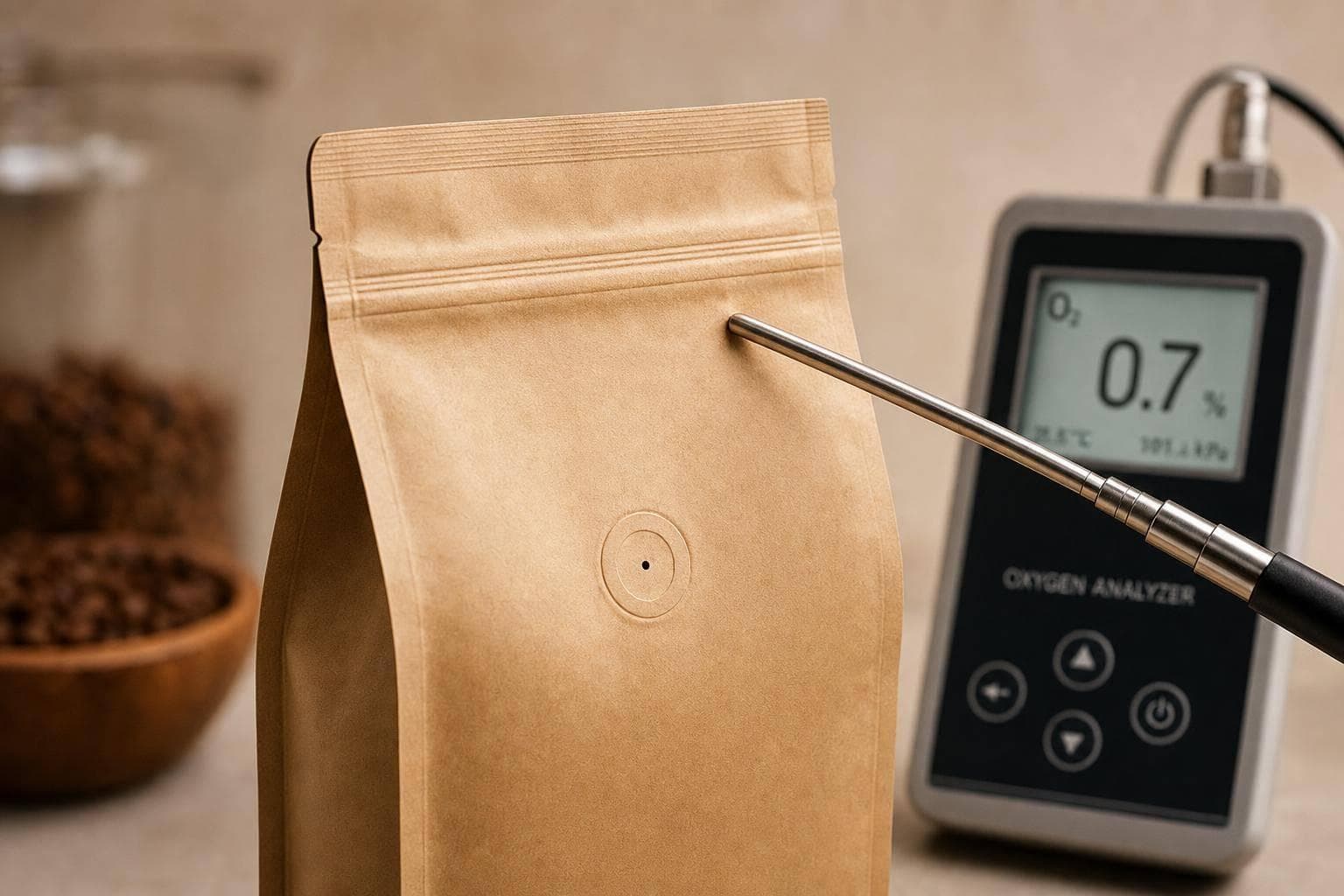
- Low residual oxygen matters: many packing setups target 1% to 2% O2 after sealing.
- Material choice matters: high-barrier bags can support 6 to 12 months for whole bean coffee, while low-barrier paper-style formats can lose quality in days or weeks under heat.
- Simple QC checks like leak tests, headspace gas checks, valve testing, and storage logs help catch problems before coffee ships.
- Even a small packaging cost cut can backfire. One example in the article shows $0.02 saved per bag turning into a $15,000 loss when 5,000 bags had to be dumped.
If I had to boil the article down to one point, it would be this: coffee packaging QC is not about how the bag looks. It’s about whether the bag can keep coffee stable from the roastery to the customer’s cup.
A few takeaways stand out right away:
- High-barrier materials beat low-barrier paper or cloth when shelf life matters.
- MAP and nitrogen flushing help keep oxygen low.
- Degassing valves need to vent CO2 without letting air back in.
- Storage records and batch logs matter when complaints, returns, or wholesale disputes show up.
- For small roasters, the first moves are simple: pick a better bag, test seals, and print the roast date.
The rest of the piece explains how those checks work, what the research says, and where independent small-batch coffee roasters should focus first.
The coffee roasters guide to packaging: Your bags should have these 3 key features
sbb-itb-af00fa5
What Research Says About Packaging, Shelf Life, and Flavor Stability
Coffee Packaging Systems: Shelf Life & Barrier Protection Compared
The research below points to the package features that have the biggest effect on shelf life.
Barrier Materials, Storage Conditions, and Sensory Decline
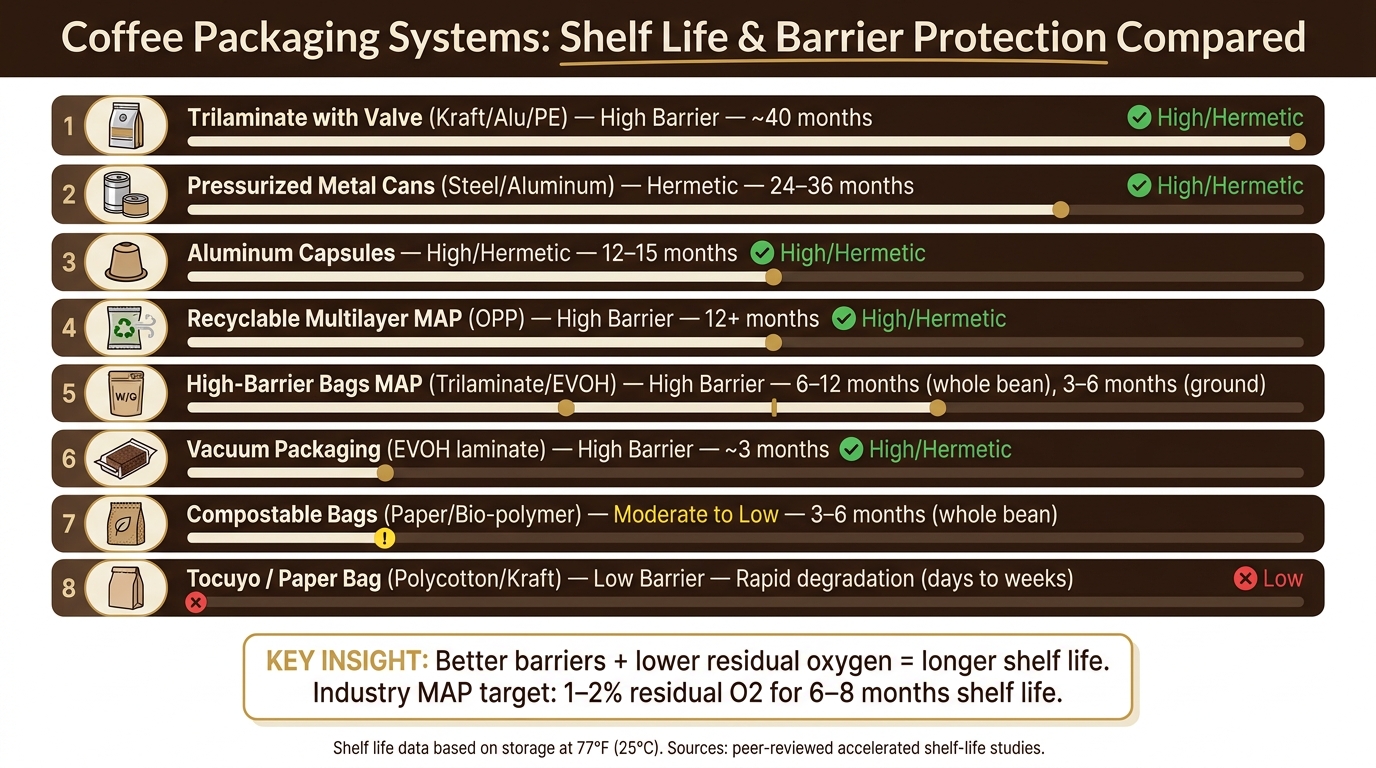
Research shows that barrier strength, storage temperature, and moisture exposure do most of the heavy lifting when it comes to shelf life. High-barrier multilayer films - like trilaminate structures made from kraft, aluminum, and polyethylene - protect polyphenols and volatile aroma compounds much longer than low-barrier options such as paper or tocuyo, a low-barrier cloth bag. In accelerated shelf-life testing at 77°F (25°C), ground coffee packed in a trilaminate foil bag with a degassing valve had a predicted polyphenol-based shelf life of 40.21 months. Tocuyo and paper-based bags, on the other hand, showed a fast drop in quality under heat exposure, often within days or weeks.
For QC, the message is simple: measure material performance and storage conditions instead of guessing.
As storage temperature climbs from 77°F to 140°F (25°C to 60°C), quality loss moves faster. Moisture pickup matters too, because even high-barrier films can still allow roasted coffee to creep upward over time. Roasted coffee usually starts at about 1.2% moisture, and international quality standards set a maximum moisture content of 5.0% for roasted and ground coffee. So if freshness is the goal, moisture needs to stay well below that limit.
Modified Atmosphere Packaging and Low Residual Oxygen
MAP cuts down the oxygen left in the bag after sealing. Once oxygen gets into the headspace, it can start lipid oxidation and form markers such as hexanal. Modified Atmosphere Packaging (MAP) tackles that problem by replacing headspace oxygen with nitrogen before sealing.
Industry guidance usually aims for 1% to 2% residual oxygen, which can support 6 to 8 months of shelf life. A 2024 study on recyclable polypropylene pods found that headspace oxygen stayed below 1% over 12 months at 77°F (25°C), while taste quality held steady through the full storage period. That matters because it shows recyclable materials can hit oxygen-control targets similar to those of non-recyclable foil formats.
Degassing valves also play a big role. They let CO2 escape after roasting without allowing oxygen back in. That helps lower rupture risk and protects the atmosphere inside the package.
Packaging Systems and Reported Shelf Life: Comparison Table
Put together, these studies show a pretty clear pattern: better barriers and lower residual oxygen usually mean longer shelf life. The numbers below come from specific studies, not blanket retail promises.
| Packaging System | Material Type | O2/Moisture Protection | Reported Shelf Life (at 77°F / 25°C) |
|---|---|---|---|
| Trilaminate with Valve | Kraft/Alu/PE | High | ~40 months - ground coffee (polyphenol stability) |
| Pressurized Metal Cans | Steel/Aluminum | Hermetic | 24–36 months |
| Aluminum Capsules | Aluminum | High (Hermetic) | 12–15 months |
| Recyclable Multilayer (MAP) | Oriented Polypropylene (OPP) | High | 12+ months - pods (taste quality) |
| High-Barrier Bags (MAP) | Trilaminate or mono-material + EVOH | High (OTR < 0.6 cm³/m²·day) | 6–12 months - whole bean; 3–6 months - ground |
| Vacuum Packaging | EVOH laminate | High | ~3 months - roasted bean (polyphenol stability) |
| Compostable Bags | Paper/Bio-polymer | Moderate to Low | 3–6 months - whole bean |
| Tocuyo / Paper Bag | Polycotton / Kraft | Low | Rapid degradation - not suitable for long retail shelf life |
That gap between formats is exactly why QC needs to check the bag, the seal, and the headspace before product goes out the door.
The Most Important Quality Control Tests in Coffee Packaging
The main checks are seal integrity, headspace gas, valve function, and storage records. In most cases, the first thing to go wrong is the seal.
Seal Integrity and Leak Detection
One bad seal is enough to let oxygen into the bag and cut shelf life short. Start with a submerged leak test. If air is escaping, you’ll see bubbles. Use vacuum decay as well to spot pressure loss under negative pressure.
Test the degassing valve separately. It needs to release CO2 while blocking oxygen from getting in. Roasted coffee gives off CO2 for weeks, so if the valve fails, bags can swell or even rupture.
If the seal checks out, the next step is to look at what’s still inside the bag.
Headspace Gas Analysis and Storage Monitoring
Headspace gas analysis measures residual O2 and CO2 inside the bag after sealing. This is the production-side check that confirms MAP targets are being met. Watching headspace O2 across batches can help spot packaging issues early, before flavor complaints start showing up.
It also helps to record storage temperature and humidity. Conditions in the roastery and warehouse affect how fast coffee breaks down, a challenge faced by many independent coffee roasters. When you log those conditions with batch numbers, roast dates, and roast profiles, you get a traceable record that helps with complaint analysis and recalls.
These checks look for different problems, but they’re strongest when used together.
Quality Control Methods: What Each Test Measures and Why It Matters
| QC Method | Purpose | Key Metrics | Impact on Shelf Life & Flavor |
|---|---|---|---|
| Leak Detection | Finds seal failures and micro-leaks | Bubble emission or pressure drop | Prevents oxygen ingress and preserves flavor stability |
| Headspace Gas Analysis | Measures residual gas levels after sealing | Residual O2 and CO2 levels | Verifies MAP targets are met in production |
| Degassing Valve Test | Verifies one-way airflow function | Pressure release and backflow resistance | Prevents bag bloating or bursting |
| Environmental Monitoring | Tracks storage conditions | Temperature and relative humidity | Prevents premature deterioration in storage |
| Batch Traceability | Links finished bags to roast batches | Batch numbers, roast dates, roast profiles | Speeds complaint analysis and recalls |
When these controls slip, the result usually shows up fast: complaints, returns, and lost trust.
How Packaging Quality Control Affects Customer Satisfaction and Brand Risk
From Oxygen Exposure to Complaints, Returns, and Lost Trust
These checks matter for a simple reason: when a seal fails or the barrier is too weak, the problem lands with the customer.
Once packaging lets in oxygen, light, or moisture, the coffee starts to change. And customers taste that change in the cup. For specialty coffee buyers in the U.S., that’s a big deal. They expect the flavor to line up with the story on the label.
Subscription customers tend to spot defects fast. One bad bag can make them question every shipment that comes after it. Wholesale buyers often don’t stick around and “see what happens.” They switch suppliers instead of taking the hit in silence.
That’s why a tiny packaging cost cut can turn into a much bigger loss. In one case, moving to a cheaper metallized film saved $0.02 per bag, but the barrier failed and 5,000 bags of stale coffee had to be thrown out, leading to a $15,000 loss in product and materials.
Why Documentation Matters for Private-Label and Contract Roasting
Once a packaging issue reaches the market, records decide who owns the problem.
Private-label and contract roasting run on documentation because shelf-life claims are part of the agreement, not just marketing copy. Without documented seal tests and batch logs, there’s no clean way to show whether the issue came from the roast, the packaging run, or storage after delivery.
That gray area creates friction fast. It opens the door to disputes and chips away at long-term B2B relationships.
Strong Quality Control vs. Minimal Checks: Comparison Table
| Factor | Strong QC System | Minimal Checks |
|---|---|---|
| Shelf-Life Reliability | 6–12 months, flavor stable | 2 weeks to 2 months before sensory decline |
| Complaint Frequency | Low; defects caught before shipping | High; customers receive stale or burst bags |
| Waste & Rework Costs | Minimal; preventative approach | Up to $15,000+ per failed batch |
| Brand & Customer Retention | Premium, consistent, trustworthy; up to 30% higher repeat purchases | Perceived as commodity-grade; high churn from inconsistent cup quality |
| Wholesale & Private-Label Risk | Disputes resolved with documented records | No paper trail; disputes become costly |
The next section shows the first QC steps small roasters can use to close that gap.
What This Means for Independent Roasters and Key Takeaways
Practical First Steps Small Roasters Can Take
The research points to a few practical controls that small roasters can put in place right away.
Start with the bag itself. Put barrier performance ahead of looks or cost, and choose high-barrier laminated packaging with an aluminum layer to block light, oxygen, and moisture. Those three things do most of the damage when coffee starts losing flavor. A dependable one-way degassing valve matters too. It lets CO2 out without letting oxygen creep in.
Before you commit to a big packaging order, ask for sample rolls and run tests on your own sealer. Thicker high-barrier films often need more heat and pressure, and a seal that looks fine at a glance can still leak under pressure. Use a manual squeeze test on sealed bags to catch leaks before anything ships. It also helps to check for pinholes and confirm that the one-way valve is seated correctly and working as it should.
Labeling matters too. Print the roast date, not just a best-by date. Including the roast date has been shown to increase repeat purchases by 30%.
Why This Matters for Roasters Listed on Small Coffee Roasters
These basics matter even more when customers get the product straight from the roaster.
For independent roasters listed on Small Coffee Roasters, steady packaging quality control shapes how customers experience the coffee across online, subscription, and wholesale orders. A stale bag or a bloated one can kill the sale fast and chip away at trust. Documented QC also gives roasters something concrete to point to when defending shelf-life claims in wholesale and subscription accounts.
Key Takeaways
The main lesson is simple: packaging quality decides whether the roast shows up fresh. Packaging is the last line of defense for roast quality. Poor packaging can make premium beans taste like cardboard within two weeks.
For small roasters, the basics are clear: choose high-barrier packaging, check seal integrity, and print the roast date. Those habits help protect flavor and build customer confidence.
FAQs
How can I tell if a coffee bag has a seal leak?
You can often spot a seal leak in a coffee bag by checking for a few simple signs: a hissing sound when you open it, a bloated or puffed-up bag, or visible air bubbles or leaks in the packaging.
What packaging type best protects coffee freshness?
High-barrier laminated flexible packaging with aluminum foil, a resealable zipper, and a one-way degassing valve does the best job of protecting coffee freshness.
Why? It shields the coffee from the three main troublemakers:
- Oxygen
- Light
- Moisture
At the same time, the one-way valve lets CO₂ escape without letting air back in. That matters because freshly roasted coffee keeps releasing gas for days. Without a valve, pressure can build up inside the bag. With one, the coffee can breathe out without getting exposed to the stuff that makes it go stale.
Do small roasters need headspace oxygen testing?
Yes. Small roasters need headspace oxygen testing to support quality control and help maintain coffee freshness.
With bench top or online analyzers, they can check and control oxygen levels in packaging.