How to Order Coffee Online from Local Roasters
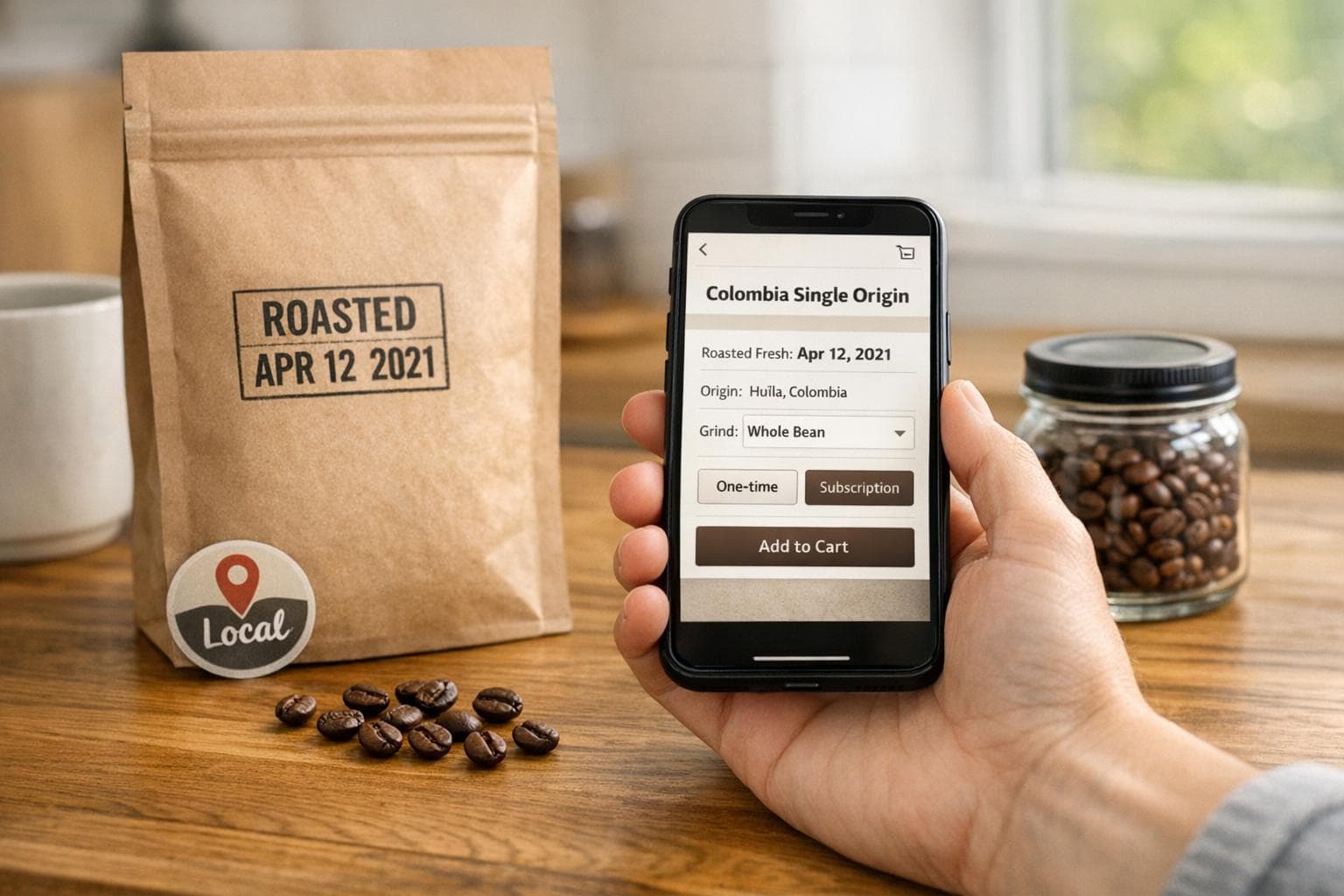
How to Order Coffee Online from Local Roasters
Ordering coffee directly from local roasters ensures fresher beans, better flavor, and supports small businesses. Unlike grocery store options that can sit for months, coffee from roasters is typically shipped within 24–48 hours of roasting. Here's how to get started:
- Find Roasters: Use platforms like Small Coffee Roasters to discover 5,600+ roasters across the U.S.
- Check Quality: Look for "Roasted On" dates, sourcing transparency, and detailed flavor notes.
- Choose Coffee: Decide between single-origin, blends, or micro-lots, and pick a roast level (light, medium, or dark) based on your taste.
- Order Format: Opt for one-time purchases, subscriptions for consistent delivery, or sampler bundles to try different options.
- Storage Tips: Store beans in an airtight, opaque container away from light, heat, and moisture.
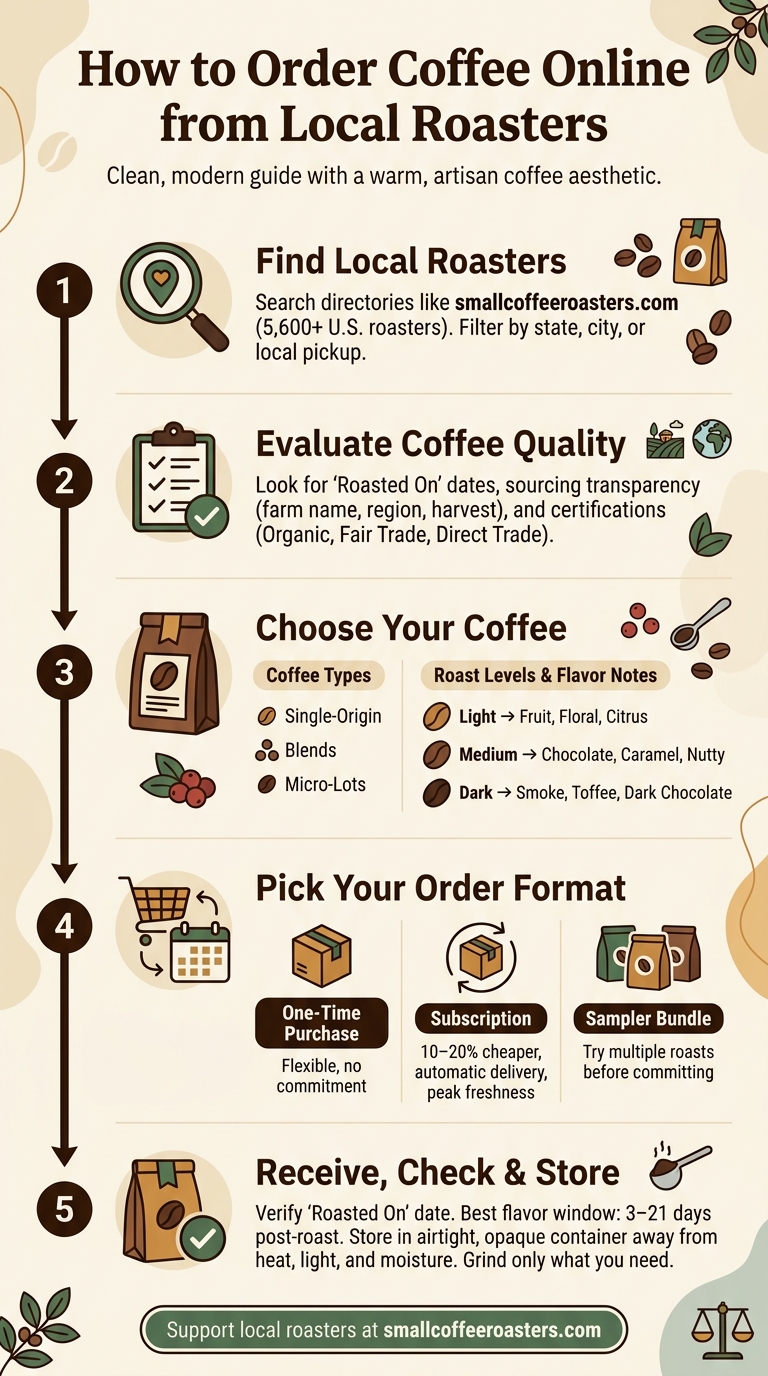
How to Order Coffee Online from Local Roasters: 5-Step Guide
NERD'S GUIDE TO BUYING GREAT COFFEE
Step 1: Finding Local Roasters Online
The journey to enjoying fresh, local coffee begins with finding a quality roaster online.
Using Directory Platforms like Small Coffee Roasters
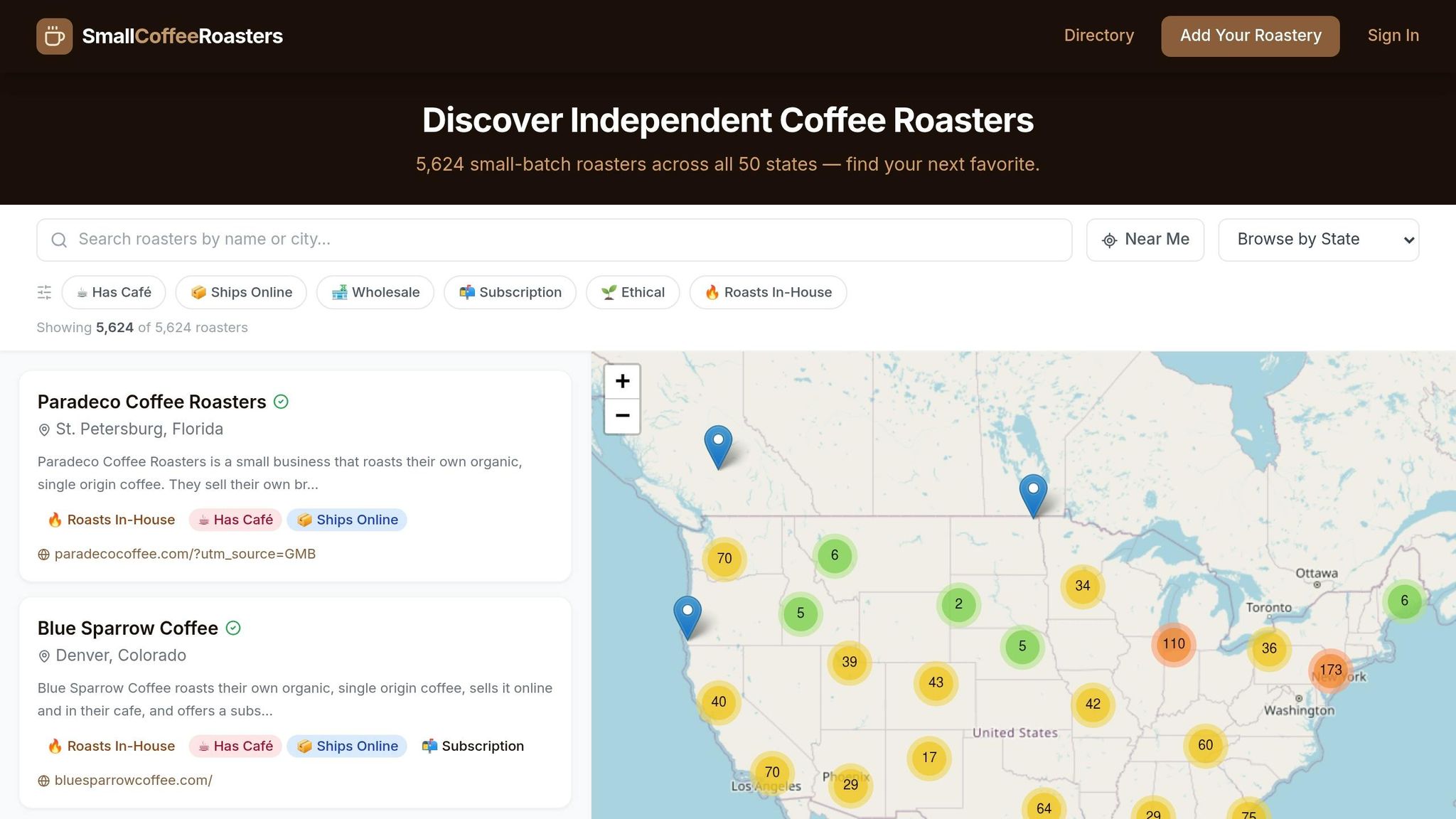
A great starting point is using a dedicated roaster directory. Small Coffee Roasters is an excellent resource, featuring over 5,600 independent roasters from across the U.S. You can search by state or city, and each profile provides details about roasting practices, shipping options, subscriptions, wholesale availability, and café services. This makes it easy to narrow down your choices.
Head over to smallcoffeeroasters.com and search for roasters in your state or a nearby city. If you’re looking to avoid shipping costs, use the local pickup filter to find nearby options.
For a more tailored search, try using specific terms like "roast-to-order coffee [your city]" or "single origin roaster near me." These phrases help you discover smaller, craft-focused roasters instead of larger commercial brands.
Once you’ve identified potential roasters, it’s time to evaluate their quality.
Key Factors to Look for When Choosing a Roaster
To ensure you’re selecting a high-quality roaster, use this checklist. The most critical factor? Look for a "Roasted On" date instead of just a "Best By" date.
"A 'roasted-on' date is the only way to verify the actual age of your coffee. Avoid any bag that only lists a 'best by' date, as these are often set twelve months into the future." - The Roast Haus Coffee Co.
Here’s a quick guide to what else you should check:
| Factor | What to Look For |
|---|---|
| Roast Date | Clearly labeled "Roasted On" date; coffee shipped within 24–48 hours of roasting |
| Sourcing | Specific details about the farm, region, or cooperative - avoid vague terms like "premium blend" |
| Certifications | Look for Organic, Fair Trade, Direct Trade, or B Corp certifications |
| Packaging | Bags should be opaque and include a one-way degassing valve |
| Flexibility | Subscription options that allow you to pause or skip deliveries |
Another important detail? Check the roaster’s "About Us" page. Legitimate independent roasters will list a physical address and provide insight into their small-scale roasting facility.
"A roaster is truly local when they operate their own small-scale facility rather than outsourcing to a massive co-packer." - The Roast Haus Coffee Co.
If the "About Us" page feels generic or overly corporate, it might indicate the operation is larger and less artisanal than it seems.
Step 2: Evaluating Coffee Offerings
Once you've identified a roaster that catches your attention, it's time to dive into their offerings. The goal? To figure out if their coffee aligns with your taste preferences and values.
Understanding Coffee Types and Roast Levels
Most local roasters focus on three main types of coffee: single-origin, blends, and micro-lots. Each has its own appeal:
- Single-origin: These beans come from one farm or cooperative and showcase the unique flavors of that region.
- Blends: A mix of beans designed for consistency, perfect for an everyday cup.
- Micro-lots: Small, carefully curated batches from a single farm, known for their rare and complex flavor profiles.
Roast level is another big factor in how your coffee tastes. Here’s a quick breakdown:
- Light roasts: Highlight the bean's natural qualities, often delivering fruity, floral, or citrus flavors with a bright acidity.
- Medium roasts: Strike a balance between the bean's origin flavors and roast-driven notes like chocolate or caramel.
- Dark roasts: Emphasize the roast itself, offering bold, smoky, and toffee-like flavors with lower acidity.
| Roast Level | Flavor Notes | Best Brew Method |
|---|---|---|
| Light | Fruit, floral, citrus | Pour-over, drip |
| Medium | Chocolate, caramel, nutty | Drip, espresso |
| Dark | Smoke, toffee, dark chocolate | French press, espresso |
Once you’ve identified the roast and type that suit you, it’s time to check whether the coffee reflects ethical and transparent sourcing practices.
How to Spot Ethical and Responsible Sourcing
Certifications like Fair Trade and Organic can be helpful, but they’re not the only indicators of responsible sourcing. Surprisingly, certified coffees make up just 20% of single-origin options in the specialty coffee market. This doesn’t mean the rest are unethical - many small farms simply can’t afford the certification process.
Instead of relying solely on labels, focus on transparency. Ethical roasters often share specific details like:
- The farm name
- Growing region
- Processing method
- Harvest season
If a roaster only provides vague descriptions like "sourced from small farms in South America", it’s worth questioning their commitment to transparency.
"Transparency and traceability matter more than the label on the bag. A roaster who can tell you the farmer's name, the altitude of the farm, and the price paid per pound is giving you more assurance than a certification sticker ever could." - Moustache Coffee Club
Still unsure? Don’t hesitate to ask. Roasters committed to ethical sourcing are usually happy to discuss their supply chain.
Reading Tasting Notes and Flavor Profiles
Once you’ve verified the source, dive into the tasting notes. These notes give you a preview of what to expect in your cup. Pay attention to the level of detail:
- Specific descriptors like "dried cherry", "jasmine", or "blackcurrant" usually indicate a well-thought-out flavor profile.
- Vague terms like "smooth" or "premium" are often just marketing fluff with little substance.
Your personal flavor preferences can guide you here. For instance:
- If you like chocolatey, low-acid coffees, look for beans from Brazil or Colombia processed using the washed method.
- If fruity and bright flavors are your thing, Ethiopian or Kenyan beans processed naturally often deliver berry and citrus notes.
The processing method also plays a big role in flavor:
- Washed coffees: Clean and acidic.
- Natural coffees: Fuller-bodied with a jammy, wine-like sweetness.
"The roast level sets the temperature of the cup, but origin sets the character." - Mary Bozzelli, Armadillo Roasters
Here’s a useful tip: cross-check the tasting notes with the origin and processing details listed on the product page. When these align, it’s a good sign that the roaster knows their craft - and that the coffee is worth your time.
Step 3: Choosing the Right Order Format
Deciding how to purchase your coffee is just as important as picking the beans themselves. You can choose between one-time orders, subscriptions, or gift bundles - each tailored to different needs. Once you've confirmed the coffee matches your taste and ethical preferences, it’s time to settle on the format that works best for you.
One-Time Purchases vs. Subscriptions
A one-time purchase is straightforward: you buy a bag whenever you need it, with no strings attached. This is a great option if you're trying out a new roaster or if your coffee habits vary. However, keep in mind that it requires manual reordering, which could lead to brewing with stale beans if you wait too long.
On the other hand, subscriptions are designed for convenience and freshness. These roast-to-order plans ensure your beans arrive at their peak, typically within 3–14 days of roasting. Subscriptions often come with perks like a 10–20% discount compared to one-time purchases.
"A subscription ensures you're always drinking coffee at its best, not whatever's been sitting on a shelf." - Spiritus Coffee Co.
| Feature | One-Time Purchase | Subscription |
|---|---|---|
| Cost | Standard retail price | Often 10–20% cheaper |
| Convenience | Requires manual reordering | Automatic delivery on your schedule |
| Commitment | None | Recurring (with pause options) |
| Freshness | High if roast-to-order | Peak freshness with every delivery |
| Best For | Occasional drinkers | Daily coffee lovers seeking consistency |
If you lean toward a subscription, starting with a monthly delivery is a safe bet. This way, you can avoid stockpiling more coffee than you can drink. Most services let you adjust delivery frequency, pause shipments, or even swap coffee types - check for this flexibility before committing. Whether you prioritize convenience or variety, the key is to choose the method that keeps your coffee as fresh as possible.
For those exploring new flavors or shopping for a coffee enthusiast, gift orders or sampler bundles are excellent alternatives.
Gift Orders and Sampler Bundles
Sampler bundles are perfect for experimenting with a roaster's offerings without committing to a full-size bag. These bundles often include small portions of light, medium, and dark roasts, allowing you to compare flavors and pinpoint your favorite profile. They’re also a smart way to test both the coffee quality and the roaster’s shipping reliability before signing up for a subscription.
If you're buying for someone else, sampler bundles or gift subscriptions make thoughtful options. A sampler bundle is a one-time treat that lets the recipient explore a variety of flavors without any pressure. Meanwhile, a gift subscription is ideal for a daily coffee drinker who will appreciate a steady supply of fresh beans. Whichever you choose, make sure the packaging includes a "Roasted-On" date for maximum freshness.
sbb-itb-af00fa5
Step 4: Placing and Managing Your Online Coffee Order
Once you've decided on your coffee preferences, the checkout process is simple. However, a few thoughtful choices can ensure you get the best coffee experience.
How to Navigate the Checkout Process
The first step is choosing your grind size. If you own a grinder, go for whole beans to reduce oxidation - grinding increases exposure to air by about 10 times. No grinder? No problem. Just specify your brewing method (like drip, French press, espresso, or AeroPress), and the roaster will grind the beans to suit your needs .
Next, decide on your bag size and quantity. Most roasters offer 12 oz or 16 oz bags, and it’s smart to order only what you’ll use within 2–4 weeks . Ordering more than you can consume in that time may compromise the freshness you’re paying for. If you’re buying directly from the roaster’s website instead of a third-party marketplace, you’re not only supporting the roaster (since they avoid 25–40% platform commission fees), but you’re also more likely to receive beans roasted to order. Before completing your purchase, double-check that the roaster lists a physical address and contact details. After confirming your selections, review the shipping and fulfillment options.
Checking Shipping and Fulfillment Details
Once your order is placed, focus on the details that ensure maximum freshness. Start by reviewing your confirmation email. Look for a "Roasted-On" date instead of a "Best-By" date, as knowing the roast date is key to enjoying peak flavor.
Top-tier roasters often ship within 24 hours of roasting , keeping your beans within the ideal 3–21 day freshness window. Some roasters even share their roasting schedules (e.g., "we roast every Tuesday"), so placing your order just before that day ensures you get the freshest batch. Also, check if your order qualifies for free shipping - many roasters offer this for purchases over $50 or $60 - or see if local pickup is an option. If the roastery is nearby, picking up your order can save on shipping costs entirely . These small steps ensure every cup you brew is as fresh and flavorful as possible while supporting local roasters.
Step 5: Receiving and Storing Your Coffee
Checking Roast Dates and Packaging
When your coffee arrives, the first thing to check is the "Roasted-On" date on the bag. This date is your guide to freshness. As I Prefer Craft Coffee puts it:
"Roast date tells you when flavor begins. Best-by tells you when flavor ends. Big difference."
Specialty coffee typically shines between 3 and 21 days after roasting. After this window, you might notice the flavor starts to fade. By six weeks, the coffee can taste noticeably dull or flat.
Also, pay attention to the packaging. Look for a one-way degassing valve - a small but crucial feature that ensures freshness by allowing gases to escape without letting air in. When you open the bag, fresh beans should release a strong, aromatic scent and visibly bloom during brewing.
How to Store Coffee Properly
Once you've confirmed your coffee is fresh, proper storage will help maintain its flavor and quality. Coffee beans are sensitive to oxygen, light, heat, and moisture, so taking precautions is essential. Transfer your beans to an airtight, opaque container - ceramic or stainless steel canisters work well - and store it in a cool, dark place, far from heat sources like your stove.
Avoid storing your coffee in the refrigerator. Coffee beans are porous and can absorb moisture and odors, which can ruin their taste. If you're using whole beans (highly recommended), grind only what you need right before brewing. This helps prevent oxidation and keeps your coffee tasting fresh.
To enjoy your coffee at its best, aim to finish the bag within 2 to 4 weeks of the roast date. For beans roasted the same day, let them rest for 1–2 days before brewing. This resting period allows excess CO₂ to escape, ensuring a better flavor extraction when you brew.
Conclusion: Supporting Local Roasters with Every Cup
Ordering coffee online from a local roaster is straightforward when you follow a few key steps. Start by exploring directories like Small Coffee Roasters, which features 5,624 independent roasters across the United States. Once you've found a roaster, evaluate their offerings by looking at sourcing transparency, roast dates, and flavor profiles. Decide on the best format for your needs - whether that's a one-time order, a subscription, or a sampler bundle - and review shipping and fulfillment details before completing your purchase. Each order not only brings you fresher coffee but also helps sustain local communities and the craftsmanship behind artisan coffee.
Beyond convenience, every dollar you spend directly with local roasters makes a significant difference. It ensures they avoid high platform fees, allowing them to invest in better beans and pay farmers fairly.
"When you support roasters directly, you get: Fresher beans, More roast-to-order coffee, Better communication, Faster adjustments, and usually better pricing per ounce." - I Prefer Craft Coffee
Your purchase has a ripple effect that goes far beyond your morning cup. Many artisan roasters pay premium prices for high-quality harvests, helping family-owned farms thrive without being forced into low-price commodity markets. As Lost Without Coffee Co. explains:
"By choosing to buy directly from a small-batch roaster, you are casting a vote for a more sustainable and ethical coffee model."
This approach creates a coffee ecosystem that benefits everyone - farmers, roasters, and coffee enthusiasts alike. By choosing to support local roasters, you're contributing to a more sustainable and ethical coffee future.
FAQs
How do I know a roaster is truly local and independent?
To determine if a coffee roaster is genuinely local and independent, pay attention to the details they provide. Look for specifics like the farm name, region, and altitude where the beans are grown - avoid places that rely on generic marketing buzzwords. Authentic roasters often go a step further by sharing stories about the farmers they work with and highlighting direct trade partnerships.
Choose roasters that offer a "roasted-to-order" service or clearly display their roasting schedules. This shows they roast fresh batches rather than relying on pre-packaged stock. Also, ensure they roast their beans in-house, as this is a strong indicator of their independence. Finally, check their social proof - reviews, testimonials, or community engagement can provide additional confirmation of their authenticity.
How much coffee should I order so it stays fresh?
For the best flavor, enjoy your coffee between 3 and 21 days after it's roasted. While some specialty coffees can maintain their taste for up to 6 weeks, it's ideal to finish your beans within 30 days. To prevent having too much at once, think about setting up a subscription with smaller, more frequent deliveries. Always go for whole beans - grinding them accelerates staling nearly tenfold.
Should I buy whole bean or pre-ground coffee?
For the best taste and aroma, opt for whole bean coffee and grind it right before brewing. Once coffee is ground, it exposes more surface area to oxygen, which speeds up the loss of freshness. Using a burr grinder is ideal because it produces a consistent grind size, which is key for proper extraction. If grinding your own coffee isn’t an option, pre-ground coffee from a trusted roaster is a solid choice and usually outshines most grocery store alternatives.