Local Events Coffee Roasters Can Host
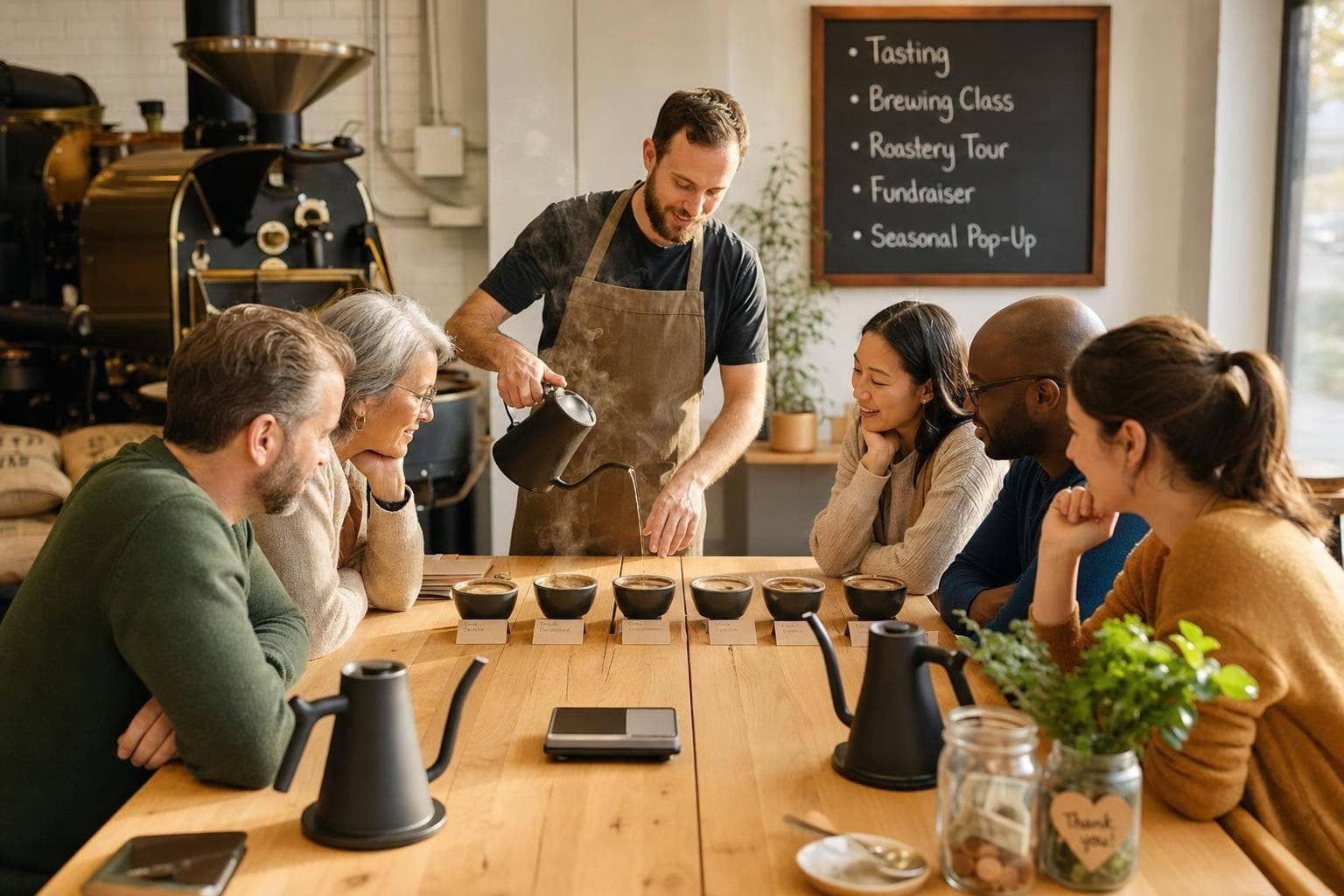
Local Events Coffee Roasters Can Host
If I want more local traffic, repeat visits, and stronger coffee sales, hosting simple in-person events is one of the best ways to discover independent coffee roasters and build a community. The main options here are tastings, brewing classes, fundraisers, partner nights, roastery tours, and seasonal events - and each one fits a different goal, budget, and crowd size.
Here’s the short version:
- I start by picking one goal: community, ticket sales, or wholesale leads.
- I set a budget that covers coffee, food, staff, permits, insurance, marketing, and print items, then add 10% to 15% extra for last-minute costs.
- I match the format to the crowd:
- 10 to 30 guests for small tastings
- 20 to 60 for themed classes or partner events
- 100+ for large public events
- I plan key logistics early:
- venue and power access
- ADA access
- staffing
- permits 6 to 8 weeks ahead
- follow-up email within 48 hours
- I track simple results, like email sign-ups, sales per guest, and loyalty joins. Event email opt-ins often land around 10% to 30%, with loyalty sign-ups around 5% to 15%.
The event ideas in this piece break down into a few clear groups:
- Coffee tasting events: cuppings, tasting flights, drop-in sampling
- Hands-on classes: pour-over, French press, espresso sessions
- Community events: donation nights, nonprofit tie-ins, off-site service
- Partner events: bakeries, artists, breweries, fitness groups
- Roastery events: tours, demos, wholesale open houses
- Seasonal events: spring cold brew launches, summer pop-ups, fall releases, winter gift nights
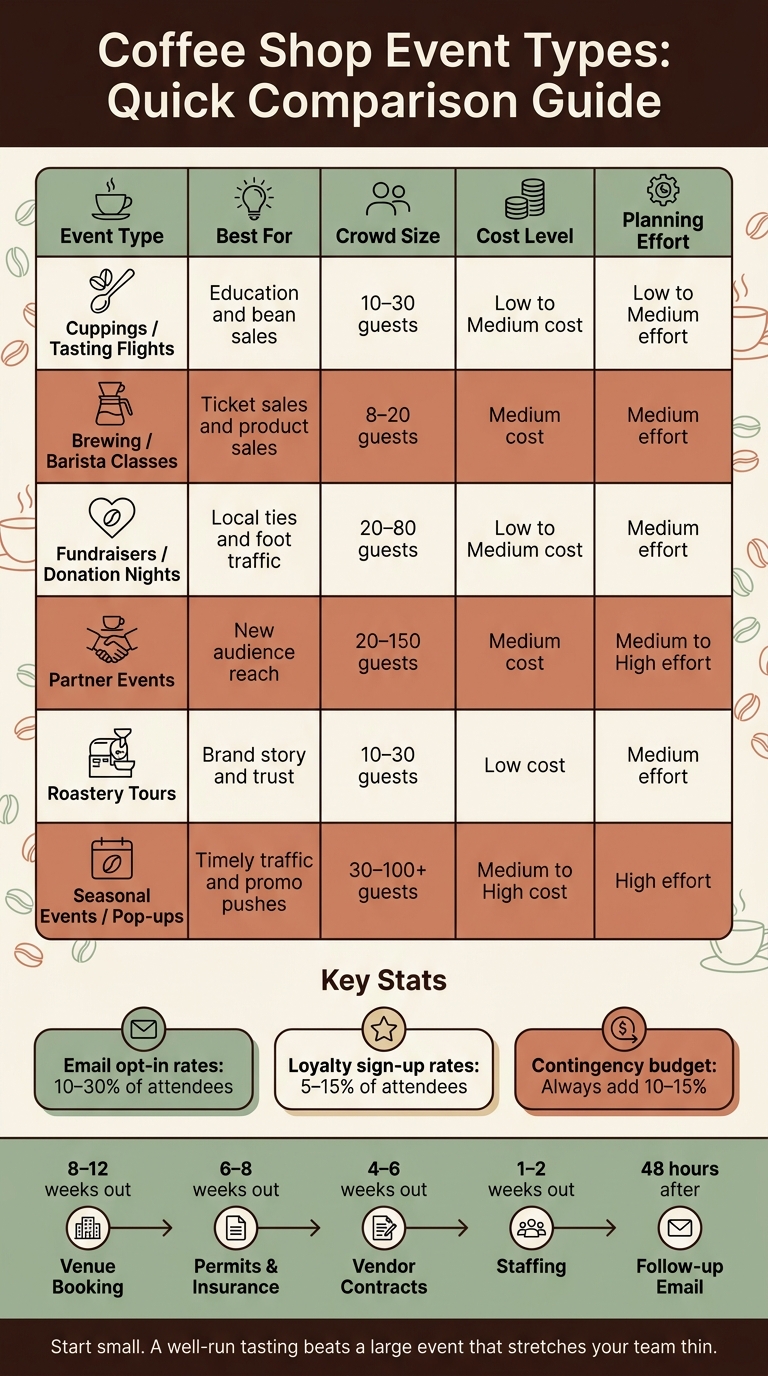
Coffee Shop Event Types: Quick Comparison Guide
Quick Comparison
| Event Type | Best For | Crowd Size | Cost Level | Planning Effort |
|---|---|---|---|---|
| Cuppings / Tasting Flights | Education and bean sales | 10–30 | Low to medium | Low to medium |
| Brewing / Barista Classes | Ticket sales and product sales | 8–20 | Medium | Medium |
| Fundraisers / Donation Nights | Local ties and foot traffic | 20–80 | Low to medium | Medium |
| Partner Events | New audience reach | 20–150 | Medium | Medium to high |
| Roastery Tours | Brand story and trust | 10–30 | Low | Medium |
| Seasonal Events / Pop-ups | Timely traffic and promo pushes | 30–100+ | Medium to high | High |
The main takeaway is simple: I don’t need a huge event to get results. A small, well-run tasting or class can do more than a large event that stretches the team too thin. From there, I can move into tours, partner nights, and seasonal launches that fit my space and staff.
sbb-itb-af00fa5
Planning basics before picking an event
Before you choose an event type, lock down the basics that matter for any gathering you host. Skip this part, and it's easy to end up short-staffed, over budget, or stuck with a format that doesn't fit your space. These choices will narrow down the event ideas in the next checklist.
Set the goal, budget, and event size
Start with one main goal: community building, education, ticket revenue, or wholesale leads. Then track two KPIs, like email sign-ups and revenue per attendee.
Your budget should cover the full picture:
- Coffee
- Food
- Staff time
- Permits
- Insurance
- Marketing
- Printed materials
On top of that, always add a 10–15% contingency fund for last-minute surprises.
Timing matters too. Weekday evenings tend to work well for community nights. Mid-morning or afternoon is often a good fit for tastings. Weekends usually make more sense for family events or festivals.
As for size, here's a simple way to think about it: use 10–30 guests for intimate tastings, 20–60 for themed sessions, and 100+ for larger festivals.
Confirm setup, staffing, and follow-up steps
Assign roles before event day so nothing falls through the cracks. At a minimum, set an event manager, barista leads, a greeter, and one floater who can jump in when something goes sideways. For larger events, recruit 20–30% more volunteers than you think you need. No-shows are part of the game.
Run a full rehearsal one to two days before the event. Test the equipment. Walk through the program timing. Make sure the team knows where to be and when.
On the logistics side, check that your venue covers the basics:
- Enough seating
- Parking
- ADA-accessible routes and reserved seating for mobility needs
- Enough power capacity for espresso machines or other equipment
Handle permits and health approvals at least 6 to 8 weeks before the event.
After the event, move fast. Send a follow-up email within 48 hours with a targeted offer, like a subscription trial or a bean discount. That's a simple way to turn event traffic into repeat visits. Well-run events often see email opt-in rates of 10–30% and loyalty program enrollments of 5–15% of attendees.
| Planning Category | Key Action | Timing |
|---|---|---|
| Venue Booking | Reserve space; confirm water and power access | 8–12 weeks out |
| Permits & Insurance | Apply for event permits; get liability insurance | 6–8 weeks out |
| Vendor Contracts | Sign agreements; confirm delivery logistics | 4–6 weeks out |
| Staffing | Finalize roles and schedule training | 1–2 weeks out |
With those basics in place, you're in a much better spot to pick the event format that fits your audience and your space.
Coffee tasting and workshop events
Educational events give cafés and roasteries a simple way to use the space, gear, and coffee they already have to teach guests and bring them back. If you want a lighter lift and steady foot traffic, start with tastings. If you want more hands-on time and stronger product sales, workshops are the next step.
Public cuppings, tasting flights, and sensory sessions
A public cupping follows a standard process: the same grind size, the same water volume, and water heated to 195°F to 205°F for each sample. Guests taste each coffee with cupping spoons.
Tasting flights work well for beginners because they feel approachable. You can serve a few coffees side by side - maybe different origins or processing methods - and guide people with plain language. Broad terms like fruity, nutty, or sweet are easier to grasp than jumping straight into very specific flavor notes.
A few small details make these sessions much smoother:
- Give guests tasting sheets and an aroma kit
- Set out plain water and neutral crackers to reset the palate
- Tie the session to a featured coffee purchase so people have a clear next step
For a simpler format, drop-in sampling needs almost no setup. Airpots and small sample cups are enough. These 15-minute "taste and learn" sessions fit nicely between peak shifts and give people an easy first look at your roastery.
Ban fragrance at tastings. Strong scents can cover up coffee aroma.
| Format | Equipment Needs | Ideal Group Size | Staff Time | Approx. Cost |
|---|---|---|---|---|
| Public Cupping | High (spoons, bowls, grinders, scales) | 12–20 | Moderate (setup/cleanup) | Low |
| Guided Tasting Flight | Moderate (brewers, carafes, tasting sheets) | 10–30 | High (active hosting) | Moderate |
| Drop-in Sampling | Low (airpots, sample cups) | Unlimited | Low (passive) | Very Low |
Once guests start to understand how coffee tastes, brewing classes are a natural next move. They show people how to get similar results at home.
Home brewing classes and barista skill workshops
For guests who want more than a tasting, hands-on brewing and barista sessions make sense. These classes teach home methods while also helping bean and equipment sales.
Keep classes small so each person gets enough time to practice. At the end, hand out a take-home brew card so guests can repeat the process at home. For safety, give a short briefing on handling hot kettles, and keep cords secured and out of walking paths.
| Workshop Type | Learning Goal | Skill Level | Event Length | Equipment Cost |
|---|---|---|---|---|
| Pour-over | Precision & technique | Beginner | 60 mins | Low |
| French Press | Immersion & body | Beginner | 45 mins | Low |
| Espresso Basics | Extraction & steaming | Intermediate | 90–120 mins | High |
Price the class around the retail value of a bag of coffee and include one bag with admission. Guests leave with something physical to use at home, which gives them a simple reason to come back for another bag.
Community and partnership events
Once tastings and workshops start to feel like part of your shop’s routine, community and partner events can bring in people who haven’t stopped by your roastery yet. They tie your business to local nonprofits, artists, and nearby shops. Independent coffee roasters use tastings to help people get to know them. Partnerships put your name in front of more people. And that can turn a one-time visit into repeat foot traffic.
Fundraisers, donation nights, and cause-based coffee service
One of the easiest formats is a percentage-of-sales night. Pick a local nonprofit and put the split in writing so everyone knows how proceeds will be handled. Donation-based tastings can work, too, especially when guests can give through a QR code or another digital touchpoint.
A few small steps make these events much easier to run. Decide on the beneficiary before you start promoting. Give the partner organization a set time to speak. And use co-branded graphics so both sides can share the event with their audiences.
For off-site events or donation-led setups, use a written partner agreement that covers proceeds, pricing, arrival times, and cleanup. It may sound a bit boring, but it saves headaches later.
Off-site catering for neighborhood events can get your brand in front of a new crowd. The tradeoff is simple: it usually takes more time, more gear, and more coordination than an in-shop fundraiser night. Here’s how the two formats stack up:
| Feature | In-Shop Fundraiser Night | Off-Site Partner Event Catering |
|---|---|---|
| Exposure | Medium; primarily reaches locals and regulars | High; reaches entirely new audiences |
| Revenue Potential | High; includes retail bag sales and high-margin drinks | Variable; often depends on flat fees or high-volume service |
| Staff Workload | Moderate; uses existing infrastructure | High; requires transport, setup, and breakdown |
| Planning Complexity | Low; controlled environment | High; requires permits, power checks, and logistics |
Once donation nights are working well, you can branch into collaboration events that lean more on shared promotion.
Pairings, art nights, and local business collaborations
Food partners like local bakeries and chocolatiers are usually the easiest place to begin. Coffee-and-pie or coffee-and-chocolate pairings give both businesses a reason to promote the event, and they fit neatly into morning or early-afternoon service.
Evening events bring in a different crowd. A local artist pop-up or a live acoustic set can draw guests who want more than just a drink. Setup costs for an open mic or acoustic night usually land between $150 and $600, which covers a PA rental and artist fees. Expected turnout runs from 20 to 80 guests. Pay close attention to seating flow so people can move between the performance area and the bar without traffic jams.
Before you lock in any partnership, require shared promotion and a written agreement. Whether you’re working with bakeries, chocolatiers, artists, or musicians, ask partners to share co-branded graphics with their own audiences.
The best partner is the one that fits your traffic pattern and your team’s bandwidth.
| Partner Type | Best Event Format | Expected Turnout | Best Daypart |
|---|---|---|---|
| Bakeries | Coffee & pastry pairings | 20–50 | Morning / Afternoon |
| Artists | Gallery nights / Live painting | 30–80 | Evening |
| Breweries | Coffee beer launches / Pop-ups | 50–150 | Evening / Weekend |
| Fitness Studios | Post-run or post-ride coffee socials | 10–30 | Early Morning |
Roastery tours, seasonal events, and next steps
Roastery tours and behind-the-scenes education
Tastings and workshops can spark interest. Tours take that interest a step further by showing people how your coffee is made.
A roastery tour gives guests a look inside your process. They can watch roasting demos, hear talks about sourcing, and learn about your sustainability practices. That kind of access can deepen your brand story and make the coffee feel more real to the people drinking it.
Keep group sizes small so everyone can hear, follow along, and ask questions. Before the tour begins, set clear safety boundaries around hot equipment. Ask staff to skip strong scents on tour days, and sanitize all shared tasting tools between sessions. It also helps to hand out printed guides or tasting sheets so guests can track what they’re seeing and tasting.
If you’re hosting a wholesale open house, shift the focus. Those guests usually care less about sensory education and more about equipment, workflow, and business details.
| Tour Type | Target Audience | Duration | Depth | Staffing Needs |
|---|---|---|---|---|
| Drop-in Tour | Walk-in guests | 15–20 min | Low (overview) | 1 Barista/Guide |
| Scheduled Small-Group | Enthusiasts/VIPs | 45–60 min | High (sourcing, science) | 1 Lead Roaster/Educator |
| Wholesale Open House | Prospective wholesale buyers | 2–3 hours | Technical (business focus) | Sales & Ops Team |
Seasonal event ideas and a final planning checklist
Seasonal events are a smart way to turn interest into visits and sales. When you plan around the calendar, it’s easier to stay on top of inventory, staffing, permits, and promo timing. Each season gives you a natural angle, which helps the event feel timely instead of forced.
| Season | Event Type | Drink Focus | Typical Lead Time |
|---|---|---|---|
| Spring | Cold Brew Launch | Nitro / Cold Brew flights | 4–6 weeks |
| Summer | Outdoor Pop-up | Iced lattes / Refreshers | 8–12 weeks (permits) |
| Fall | Harvest Release | Limited-edition single origins | 4 weeks |
| Winter | Holiday Gift Night | Signature lattes, spiced blends | 6 weeks |
For outdoor summer events, reserve a backup indoor space and confirm power access before you start promoting. It’s a simple step, but it can save you a lot of stress later.
Fall harvest releases pair well with National Coffee Day on September 29. Winter gift nights usually need a longer promo runway - about 6 weeks out - so guests have time to plan holiday purchases.
No matter which format you choose, tie the event to one clear goal. Keep the logistics within your team’s capacity, then track turnout and sales against that goal. The event types that show up in your numbers are the ones worth doing again.
FAQs
Which event should I start with first?
Start with one clear goal. That could be driving store traffic, generating leads, or increasing revenue.
Then keep your first event simple.
A smart place to begin is a small, 15-minute taste-and-learn session between peak shifts. It’s easy to set up, gives you face-to-face time with customers, and lets you test what people respond to before you move into bigger workshops or community events.
How do I know if an event was worth it?
Check if the event did what you wanted it to do, whether that was bringing more people into the store, getting new leads, or driving more sales.
Then look at the numbers that matter most:
- Email sign-ups, which often land around 10% to 30% of attendees
- Loyalty program enrollments
- Spikes in social media activity
- Wholesale inquiries
- Press mentions
- New partnerships over the next 3 months
That way, you’re not just judging the event by how busy it felt in the moment. You’re looking at what happened after, which is where the bigger picture starts to show.
What permits do I need to host a coffee event?
For public events, you’ll usually need event permits, health department approvals - most of all if you’re serving food - and general liability insurance.
Start early. Plan to apply about six to eight weeks before the event, and submit permit paperwork as soon as the venue is locked in. City or county reviews can take several weeks, so waiting can put you in a bind. You may also need vendor contracts and other public event logistics paperwork.